
- News
- City News
- chennai News
- It’s a grain drain up in the hills
Trending
This story is from September 5, 2023
It’s a grain drain up in the hills
While the country celebrates 2023 as the Year of Millets, up in the hills of the Nilgiris, local grain varieties such as samai, ragi, varagu, aruva samai, samba wheat and ganjai, which once flourished, have faded into obscurity.
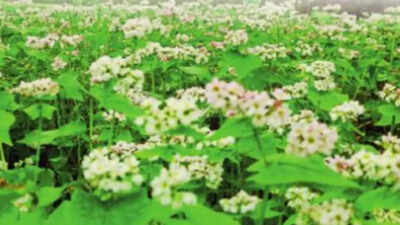
Until the 1980s, millets were cultivated on 1,137 hectares in the Nilgiris. Records at the horticulture department show that in 2021-22 it was just 13ha
According to records, until the 1980s, millets were cultivated on 1,137 hectares in the Nilgiris, but now, all the minor grain varieties, especially ganjai grown in the hills, are almost wiped out.

“We used to cultivate ragi and samai and cereals like samba wheat and especially ganjai during the summer season till the 1990s,” says K Mohan, a farmer from Kambatty village. “But the farms were invaded by wild boars, which would destroy the crop. So we switched to tea cultivation. None of us grow millets now.”
As ganjai was popular among the Badaga community in the hills, it used to be cultivated in several areas. “After two cycles of potato cultivation, when the soil needed rejuvenation, samai, ragi and gan jai were sown. After the harvest, the hay straws were left in the soil for manure. But all that has changed now,” says Mohan.
K Kali, a Kurumba tribal from Kilkotagiri, is one of the few farmers in the area who stood his ground with millets. “We have been growing millets on this land for generations. We stock the cultivated millets for our own needs and the rest, if any, are sold through NGOs,” says Kali, who owns around two acres of land. “We cannot survive without our traditional food, which is millet. That is why we continue to cultivate it.”
Kallan, a tribal elder, says that most farmers switched to tea for commercial reasons. “We need to consume millets to keep our bodies warm, which is why we continue to grow the crop.”
S Sibila Mary, joint director of the horticulture department, says they are helping Nilgiris farmers rediscover the importance of millets. “We have written to the government to sanction funds for subsidies for millet cultivation,” she says.
The horticulture department is planning to encourage farmers with 100 hectares to cultivate millet. “Our proposal suggests that ?10,000 be granted as subsidy per hectare for millet cultivation,” she says. “Pushing the farmers towards millet cultivation is a tough task. We will create awareness and motivate farmers but a subsidy is what will help.”
Email your feedback to southpole.toi@timesgroup.com
End of Article
FOLLOW US ON SOCIAL MEDIA






Photostories

Hot Picks
TOP TRENDING
Popular Categories
Hot on the Web
Top Trends
Trending Topics
Kaun Banega Crorepati 16Dhanteras 2024RajinikanthDiwali 2024 DateThe Great Indian Kapil Show 2Salim KhanVicky Vidya Ka Woh Wala Video CollectionSomy AliKaran JoharBigg Boss 18PapayaSaif Ali KhanPataudi PalaceGippy GerwalStar Singer 9 WinnerAnushka SharmaDiwali 2024Best Premium LaptopsF1 Us Grand Prix 2024Wordle Answer
Living and entertainment
Latest News
Chennai Railway Division to launch ‘Tuesday – Digital Day’ driveGift artisanal handmade chocolates this Diwali to ace the gifting game!Bajaj Pulsar N125 first-ride review: More than just a commuter!Female constable raped in Kanpur, accused arrestedFestivals in October 2024: From Navratri, Dussehra to Diwali, check complete list hereApplying castor oil on navel at night: Why it is highly recommendedEldeco: A Legacy of Excellence in Real EstateHow screen addiction is becoming a pain in the neck for teensDr. Dinshaw Pardiwala The Man Behind Every Comeback Story!'STR 49' new poster: Silamabarasan's film with Ashwath Marimuthu is officialFresh injury setback for England as Jos Buttler ruled out of West Indies ODI series“It was a challenge to get into Sahastra Raavan’s character and truly understand his motives” says Praneet Bhatt of Shrimad RamayanESA listing: Rane hopes to get justice for SattariUsgao, Shiroda panchayats declared tuberculosis-free2 dead, 22 rescued after migrant boat runs into trouble in rough weather near Greek islandsThe stories we’ve told are not just about the diaspora but displacement: Imtiaz AliRahul Dholakia reveals Aishwarya Rai’s first film was stalled due to the director; Says, 'His arrogance was of another level'IWL to be held in Chennai for first time; Sethu FC to play home games at Nehru stadium
Copyright © 2024 Bennett, Coleman & Co. Ltd. All rights reserved. For reprint rights: Times Syndication Service